While debate continues over the existance of complex extra-terrestrial life forms, microbial life may probably be commonly found because of recently-discovered extremophiles. An extremophile is an organism, usually unicellular, which thrives in or requires 'extreme' conditions that would exceed optimal conditions for growth and reproduction in the majority of other terrestrial organisms. Astrobiologists are particularly interested in studying extremophiles, as many organisms of this type are capable of surviving in environments similar to those known to exist on other planets.
There are many different classes of extremophiles, each corresponding to the way it has adapted to its environment. Acidophiles thrive in very acidic evironments with an optimum pH level at or below pH 3, whereas alkaliphile find optimal growth at pH levels of 9 or above. Hyperthermophile live in hot temperatures between 80-121 °C, such as those found in hydrothermal systems, while cryophile grows best in cold soils, permafrost, polar ice and cold ocean water. Xerophiles, such as the soil microbes of the Atacama Desert, grow in extremely dry, desiccating conditions.

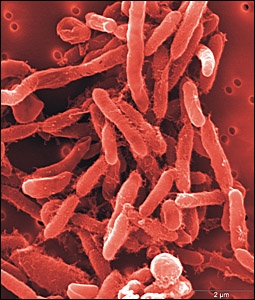
Extremophiles were first discovered in the
hot springs of Yellowstone National Park
