|
|
Kota Kuala Selangor
The Twin Guardians of Selangor
 Located near the mouth of the
Selangor River, the fort complex at Kuala Selangor
actually consists of two forts – the larger stone fort of Kota Malawati
on
Bukit Selangor and a smaller earthworks fort on Bukit Tanjong Keramat
about
a kilometre and a half to the northeast. Protected by steep hill
slopes,
flanked on three sides by a sharp bend of the Selangor River and
surrounded
on all sides by thick mangrove swamps, it was an ideal defensive
position
for a fort. Its position on the mouth of the Selangor river, with a
panoramic
view of the Straits of Melaka and the Klang Valley, also gave the fort
vital
strategic importance. Located near the mouth of the
Selangor River, the fort complex at Kuala Selangor
actually consists of two forts – the larger stone fort of Kota Malawati
on
Bukit Selangor and a smaller earthworks fort on Bukit Tanjong Keramat
about
a kilometre and a half to the northeast. Protected by steep hill
slopes,
flanked on three sides by a sharp bend of the Selangor River and
surrounded
on all sides by thick mangrove swamps, it was an ideal defensive
position
for a fort. Its position on the mouth of the Selangor river, with a
panoramic
view of the Straits of Melaka and the Klang Valley, also gave the fort
vital
strategic importance.
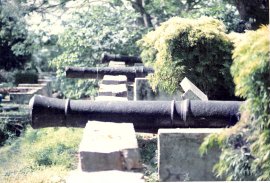 The fort was first constructed some time in the early 16th
century by Tun
Mahmud, a son of Sultan Mahmud, the last Sultan of Melaka, from which
he
administered the state on behalf of the Johor empire . The Bugis
established
themselves in Selangor in the 17th century and installed Raja Lumu as
Selangor’s
first Sultan in 1756. Raja Lumu, who took the title Sultan Salehudin
Shah,
established himself at the Kota Malawati, replacing its earlier
earthworks
with stout stone walls and ringing its perimeter with cannon. The fort was first constructed some time in the early 16th
century by Tun
Mahmud, a son of Sultan Mahmud, the last Sultan of Melaka, from which
he
administered the state on behalf of the Johor empire . The Bugis
established
themselves in Selangor in the 17th century and installed Raja Lumu as
Selangor’s
first Sultan in 1756. Raja Lumu, who took the title Sultan Salehudin
Shah,
established himself at the Kota Malawati, replacing its earlier
earthworks
with stout stone walls and ringing its perimeter with cannon.
 Sultan Ibrahim Shah who succeeded him further improved the
fort’s defences
with the construction of additional walls at the base of the hill and
the
placement of even more cannon, including a huge cannon with the
name
of Seri Rambai. A gift from the Sultan of Acheh, this cannon
was originally
given by the Dutch to Sultan Riayat Shah Shah III of Johor but was
captured
by the Achinese when they sacked his capital in 1613. According to
Dutch
records, the fort was at the time was equipped with a total of 68
cannon.
It was also at this time that the second earthworks fort was built at
Bukit
Tanjong Keramat, to help support the main fort from any surprise
flanking
attacks by sea. Sultan Ibrahim Shah who succeeded him further improved the
fort’s defences
with the construction of additional walls at the base of the hill and
the
placement of even more cannon, including a huge cannon with the
name
of Seri Rambai. A gift from the Sultan of Acheh, this cannon
was originally
given by the Dutch to Sultan Riayat Shah Shah III of Johor but was
captured
by the Achinese when they sacked his capital in 1613. According to
Dutch
records, the fort was at the time was equipped with a total of 68
cannon.
It was also at this time that the second earthworks fort was built at
Bukit
Tanjong Keramat, to help support the main fort from any surprise
flanking
attacks by sea.
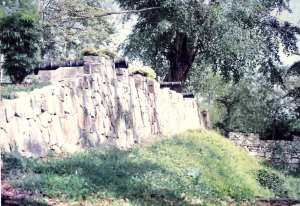 Because Selangor allied itself with the Achinese when they
attacked Dutch
Melaka in 1784, a fleet of 11 Dutch ships led by Dirk van Hogen and
several
vessels belonging to their ally, Raja Muhammad Ali of Siak, sailed to
Kuala
Selangor in July that year and shelled the fort mercilessly for two
weeks.
On August 2, a combined force of Dutch troops and Siak Malays landed
and
stormed the hill, driving Sultan Ibrahim’s forces into the surrounding
jungle.
The Dutch occupied the fort, renaming Kota Malawati ‘Altingburg’ and
calling
Kota Tanjong Keramat ‘Utrecht’. Because Selangor allied itself with the Achinese when they
attacked Dutch
Melaka in 1784, a fleet of 11 Dutch ships led by Dirk van Hogen and
several
vessels belonging to their ally, Raja Muhammad Ali of Siak, sailed to
Kuala
Selangor in July that year and shelled the fort mercilessly for two
weeks.
On August 2, a combined force of Dutch troops and Siak Malays landed
and
stormed the hill, driving Sultan Ibrahim’s forces into the surrounding
jungle.
The Dutch occupied the fort, renaming Kota Malawati ‘Altingburg’ and
calling
Kota Tanjong Keramat ‘Utrecht’.
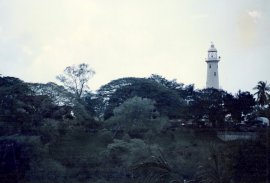 The Dutch strengthened the fort with stouter walls and
larger cannon, and
built a lighthouse on the hill summit. However, their stay at
Altingburg
and Utrecht was to be short-lived. Less than a year later, on 28 June
1785,
Sultan Ibrahim’s forces, with the help of 2,000 Pahang Malays, launched
a
surprise night attack on the fort immediately after evening Isyak
prayers
and overwhelmed it completely. The Dutch garrison under Gerardu
Zwykhardt
and August Gravensteyu were driven back to the sea. Another Dutch fleet
was
dispatched shortly and succeeded in blockading the fort for over a
year.
However, the Dutch did not dare launch any land attacks on its stout
defences
and steep hills and the fort was to remain in Malay hands until British
gunboats
pounded it to submission in 1871. The Dutch strengthened the fort with stouter walls and
larger cannon, and
built a lighthouse on the hill summit. However, their stay at
Altingburg
and Utrecht was to be short-lived. Less than a year later, on 28 June
1785,
Sultan Ibrahim’s forces, with the help of 2,000 Pahang Malays, launched
a
surprise night attack on the fort immediately after evening Isyak
prayers
and overwhelmed it completely. The Dutch garrison under Gerardu
Zwykhardt
and August Gravensteyu were driven back to the sea. Another Dutch fleet
was
dispatched shortly and succeeded in blockading the fort for over a
year.
However, the Dutch did not dare launch any land attacks on its stout
defences
and steep hills and the fort was to remain in Malay hands until British
gunboats
pounded it to submission in 1871.
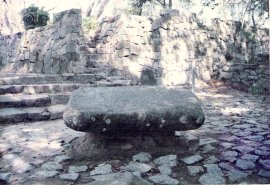 It is unsurprising that a fort so steeped in history would
also be the subject
of myth and legend. At the entrance to the main courtyard on the
summit
of the hill is a large rock tablet and it is said that a palace maiden
was
beheaded at the rock for allegedly having an affair with someone
outside
the palace. According to the legend, her blood poured all over rock and
nearby
areas to serve as a reminder to other women not to commit adultery.
Even
today, red sap runs from a nearby tree, often referred to as Pokok
Berdarah
(the Bleeding Tree), and many believe this to be the blood of the
beheaded
maiden. It is unsurprising that a fort so steeped in history would
also be the subject
of myth and legend. At the entrance to the main courtyard on the
summit
of the hill is a large rock tablet and it is said that a palace maiden
was
beheaded at the rock for allegedly having an affair with someone
outside
the palace. According to the legend, her blood poured all over rock and
nearby
areas to serve as a reminder to other women not to commit adultery.
Even
today, red sap runs from a nearby tree, often referred to as Pokok
Berdarah
(the Bleeding Tree), and many believe this to be the blood of the
beheaded
maiden.
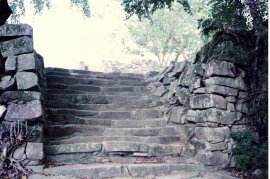 However, English sources provide a different twist to the
tale. On the day
the British gunboat Rinaldo shelled the fort, the Malays saw that the
place
was no longer tenable. A Malay chief is said to have cut the
throat
of an innocent girl and scattered her blood over the guns that he was
forced
to abandon. Her body was left on a large slab of stone before the
main
gate of the fort, a slab which is still shown as "the Stone of
Sacrifice",
because the murder was understood at the time to represent the
blood-offering
of a human victim as a prayer for victory. Most probably the poor
girl
was killed in order that her vengeful spirit should haunt the guns of
the
fort and make them a curse and a danger to the men in whose hands they
were
to fall. However, English sources provide a different twist to the
tale. On the day
the British gunboat Rinaldo shelled the fort, the Malays saw that the
place
was no longer tenable. A Malay chief is said to have cut the
throat
of an innocent girl and scattered her blood over the guns that he was
forced
to abandon. Her body was left on a large slab of stone before the
main
gate of the fort, a slab which is still shown as "the Stone of
Sacrifice",
because the murder was understood at the time to represent the
blood-offering
of a human victim as a prayer for victory. Most probably the poor
girl
was killed in order that her vengeful spirit should haunt the guns of
the
fort and make them a curse and a danger to the men in whose hands they
were
to fall.
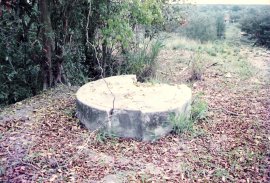 On the narrow stone path leading to the entrance of the
fort is also located
a Poisoned Well which was used to execute traitors. It was filled with
a
poisonous mixture of latex and juice from bamboo shoots and victims
were
lowered into the well to a slow and painful death. There are many
Malay
forts in the Peninsula that have such poisoned wells and it was
probably
a commonly-used form of capital punishment.. On the narrow stone path leading to the entrance of the
fort is also located
a Poisoned Well which was used to execute traitors. It was filled with
a
poisonous mixture of latex and juice from bamboo shoots and victims
were
lowered into the well to a slow and painful death. There are many
Malay
forts in the Peninsula that have such poisoned wells and it was
probably
a commonly-used form of capital punishment..
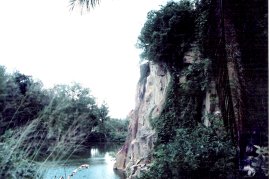 The origin of the name of Bukit Tanjung Keramat also
involves a maiden. It
is said that there was once lived a young local girl named Rabiah who
vanished
without a trace just before her wedding day. Rabiah had gone to a
nearby
pool, just below (Bukit Tanjung Keramat) to draw water but,
unfortunately,
that was the last anyone saw of her. Her family searched frantically
for
but all they found was her scarf, hanging from a branch. That night,
she
appeared to her parents in a dream, telling them that she had gone
somewhere
very peaceful and that there was no need to look for her. Rabiah’s
parents
then dedicated a shrine (‘keramat’) to her at the spot where the scarf
was
found and the hill had been known as Bukit Tanjung Keramat ever since.
To
this day, people visit the shrine asking for favours and bringing
offerings
such as chicken, flowers, fruit and incense. The origin of the name of Bukit Tanjung Keramat also
involves a maiden. It
is said that there was once lived a young local girl named Rabiah who
vanished
without a trace just before her wedding day. Rabiah had gone to a
nearby
pool, just below (Bukit Tanjung Keramat) to draw water but,
unfortunately,
that was the last anyone saw of her. Her family searched frantically
for
but all they found was her scarf, hanging from a branch. That night,
she
appeared to her parents in a dream, telling them that she had gone
somewhere
very peaceful and that there was no need to look for her. Rabiah’s
parents
then dedicated a shrine (‘keramat’) to her at the spot where the scarf
was
found and the hill had been known as Bukit Tanjung Keramat ever since.
To
this day, people visit the shrine asking for favours and bringing
offerings
such as chicken, flowers, fruit and incense.
References:
- “Kota-Kota Melayu”, Abdul Halim Nasir, 1990, Dewan
Bahasa
dan Pustaka
- “Sejarah dan Kesan-Kesan Sejarah Kuala Selangor”,
Yusoff
Hasan P.J.K.. 1981, Penerbitan Tra-Tra
- "A History of the Peninsular Malays with Chapters on
Perak
& Selangor" R.J. Wilkinson, C.M.G (Pub Kelly & Walsh Ltd.)
- "Papers on Malay Subjects" Edited by R.J. Wilkinson
(Oxford
University Press)
Write to the author: sabrizain@malaya.org.uk
The
Sejarah Melayu
website is
maintained solely by myself and does not receive any funding
support from any governmental, academic, corporate or other
organizations. If you have found the Sejarah Melayu website useful, any
financial contribution you can make, no matter how small, will be
deeply appreciated and assist greatly in the continued maintenance of
this site.
|
|

