|

Portuguese Conquest

The Johor Empire

Dutch East India

The Straits Settlements

The Kedah Blockade

The Selangor Civil War

The Perak War

Forward to
British
Malaya
|
|
The Selangor Civil War
The Bugis established themselves in Selangor in the
eighteenth century and set up one of their leaders, Raja Lumu, as its
first Sultan, with the title Sultan Salehuddin Shah. The second
Sultan, Ibrahim, joined forces with his uncle, Raja Haji, in the Bugis
attack on Dutch Malacca in 1784 and helped Perak defeat a Siamese
invasion.
 However,
with the death of Sultan Ibrahim in 1826, Selangor fell
on evil days. Sultan Muhammad, the next ruler, was unable to control
his chiefs, who actively engaged in piracy. Between intervals of
comparative quiet, said Swettenham, in his book 'British Malaya', the
"normal state of
Selangor was robbery, battle and murder". With the death of Sultan
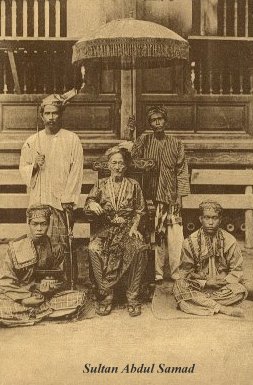
Muhammad in 1857, there was a disputed succession, and Abdul Samad, who
eventually became Sultan, had all but given up the struggle to maintain
order. However,
with the death of Sultan Ibrahim in 1826, Selangor fell
on evil days. Sultan Muhammad, the next ruler, was unable to control
his chiefs, who actively engaged in piracy. Between intervals of
comparative quiet, said Swettenham, in his book 'British Malaya', the
"normal state of
Selangor was robbery, battle and murder". With the death of Sultan
Muhammad in 1857, there was a disputed succession, and Abdul Samad, who
eventually became Sultan, had all but given up the struggle to maintain
order.
In 1867 Civil war broke out in Selangor. It originated from an
attempt by Raja Mahdi, the son of a territorial chief, to gain control
of the Klang river estuary into which the cargoes of tin from around
Kuala Lumpur arrived for export. He gained the support of Sumatran
Malays in the hinterland of Selangor who felt no loyalty towards the
Bugis chiefs - a hostility which had been maturing for generations -
and Raja Mahdi
and his Sumatran Malays captured the town of Klang.
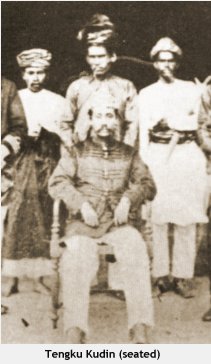
Into this chaotic scene in 1868 came a visiting Kedah prince, Tengku
Kudin, brother of the ruler of Kedah. He married Sultan Abdul
Samad's daughter, was appointed "Viceroy" of the state and was handed
the responsibility of administering it on behalf of the Sultan.
Tengku Kudin’s 500
Kedah warriors joined the Sultan’s mixed force of Bugis and Chinese led
by European mercenaries and attempted to recapture Klang.
 Raja Mahdi was a colourful warrior, renowned for his
courage and
was at the head of all the Malays considered the chivalry of
Selangor. Tengku Kudin, on the other hand, was an unpopular
‘foreigner’, with a
following of foreigners and no local allies. However, the
‘foreigner’
was a determined, single-minded man with a fund of perserverance that
none
of his rivals possessed. He sat down before his enemy's fort at
Klang, blockading the river so efficiently that neither food nor tin
entered
the town. He did not attempt to carry it by assault but simply
threatened
it and worried it for eighteen weary months – starving it of supplies
and
ruining its trade with the interior. The theatrical valour of
Raja
Mahdi was no match for such persistence - Raja Mahdi’s money ran
out; his storehouses emptied; his followers began deserting him. In
March
1870, Raja Mahdi was forced to retreat to Kuala Selangor, where began
to menace the strong fort which the Sultan was holding at the mouth of
the river. Raja Mahdi was a colourful warrior, renowned for his
courage and
was at the head of all the Malays considered the chivalry of
Selangor. Tengku Kudin, on the other hand, was an unpopular
‘foreigner’, with a
following of foreigners and no local allies. However, the
‘foreigner’
was a determined, single-minded man with a fund of perserverance that
none
of his rivals possessed. He sat down before his enemy's fort at
Klang, blockading the river so efficiently that neither food nor tin
entered
the town. He did not attempt to carry it by assault but simply
threatened
it and worried it for eighteen weary months – starving it of supplies
and
ruining its trade with the interior. The theatrical valour of
Raja
Mahdi was no match for such persistence - Raja Mahdi’s money ran
out; his storehouses emptied; his followers began deserting him. In
March
1870, Raja Mahdi was forced to retreat to Kuala Selangor, where began
to menace the strong fort which the Sultan was holding at the mouth of
the river.
Tengku Kudin dispatched powerful reinforcements to the fort under the
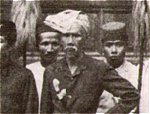
leadership of one of the Sultan’s warriors, Saiyid Mashhur. However, at
Kuala Selangor, Saiyid Mashur received news that his brother had been
killed in circumstances that led him to believe that members of the
Sultan’s family were responsible. The Saiyid vowed vengeance and at
once went over to Raja Mahdi’s forces.
 As
in Perak, the Chinese tin-miners brought their quarrels to add to
the general confusion. The Chinese were the source of most of the
state’s wealth and the rival Malay chiefs sought alliances with the
leaders of the various Chinese warring factions to gain control of key
tin-mining
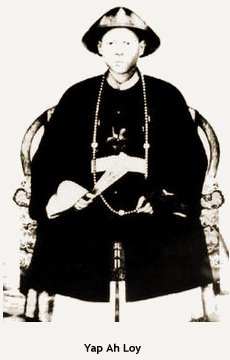
areas. The most notable of these leaders was Yap Ah Loy, who had
founded
the town of Kuala Lumpur. He took the side of the Tengku Kudin, and
tried
to maintain some kind of order with a private army of fighting men. As
in Perak, the Chinese tin-miners brought their quarrels to add to
the general confusion. The Chinese were the source of most of the
state’s wealth and the rival Malay chiefs sought alliances with the
leaders of the various Chinese warring factions to gain control of key
tin-mining
areas. The most notable of these leaders was Yap Ah Loy, who had
founded
the town of Kuala Lumpur. He took the side of the Tengku Kudin, and
tried
to maintain some kind of order with a private army of fighting men.
Immediately after the Pangkor Agreement was signed with Perak, Sir
Andrew Clarke turned his attention to Selangor and visited the State
with the Admiral of the British China squadron to get redress for a bad
case of piracy - the plunder of a junk and the slaughter of 34
persons (many of them women and children) by pirates based in Raja
Mahdi’s and
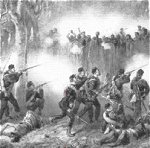
Saiyid Masshur’s stronghold in Kuala Selangor. On the 3rd of July
1871, the HMS "Rinaldo" and the colonial steamer "Pluto were despatched
to Kuala Selangor. The "Rinaldo" was lying outside the estuary but the
"Pluto"
had entered the river towing boats full of British Marines. Two
parties of Marines went ashore but were fired upon by the Malays. The
British retreated to their ships, with one Marine killed and five
wounded and the "Pluto"
steamed out of the river and went on to Penang to transport their
wounded.
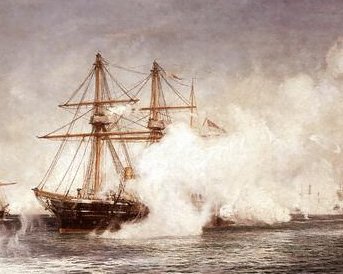 On the following day, the Rinaldo shelled the fort with
tremendous effect, driving Saiyyid Mashhur and his followers into the
surrounding jungle. The British handed Kuala Selangor over to the
charge of the Tengku Kudin, who garrisoned it with 100 Sikhs and some
30 or 40 Kedah Malays. This incident prompted a demand from the British
that Sultan Abdul Samad agree to the trial of the pirates and accept a
British officer to advise him, as was the case in Perak. The Governor
did not appoint a Resident
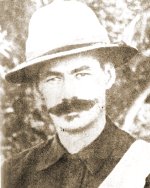
for some time, but he left behind at Selangor court a young Civil
Servant
named Frank Swettenham to give informal advice and to gather
information. On the following day, the Rinaldo shelled the fort with
tremendous effect, driving Saiyyid Mashhur and his followers into the
surrounding jungle. The British handed Kuala Selangor over to the
charge of the Tengku Kudin, who garrisoned it with 100 Sikhs and some
30 or 40 Kedah Malays. This incident prompted a demand from the British
that Sultan Abdul Samad agree to the trial of the pirates and accept a
British officer to advise him, as was the case in Perak. The Governor
did not appoint a Resident
for some time, but he left behind at Selangor court a young Civil
Servant
named Frank Swettenham to give informal advice and to gather
information.
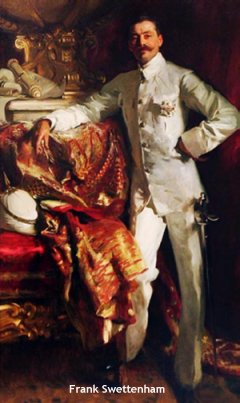 Swettenham
was to play a great part in Selangor and all Malaya.
Swettenham skilfully won the friendship of the Sultan and prominent
chiefs and restored order by the creation of a small but efficient
police force. Swettenham made his head-quarters at Kuala Lumpur, which
thus became the administrative capital of the state. With peace and
order there was soon a surplus of revenue, which Swettenham used to
improve communications - building a system of cheap bridle to all parts
of the state and constructing a railway from Klang to Kuala Lumpur.
Gradually, other departments of government were set up. European coffee
planters began to arrive from Ceylon, where a blight had destroyed
their plants. Although coffee did not prove profitable in the long run,
many of these planters turned to rubber instead – Malaya was to become
the world’s leading producer of rubber for the next century. Swettenham
was to play a great part in Selangor and all Malaya.
Swettenham skilfully won the friendship of the Sultan and prominent
chiefs and restored order by the creation of a small but efficient
police force. Swettenham made his head-quarters at Kuala Lumpur, which
thus became the administrative capital of the state. With peace and
order there was soon a surplus of revenue, which Swettenham used to
improve communications - building a system of cheap bridle to all parts
of the state and constructing a railway from Klang to Kuala Lumpur.
Gradually, other departments of government were set up. European coffee
planters began to arrive from Ceylon, where a blight had destroyed
their plants. Although coffee did not prove profitable in the long run,
many of these planters turned to rubber instead – Malaya was to become
the world’s leading producer of rubber for the next century.
By 1889, when Swettenham went to take the place of Sir Hugh Low in as
Resident in Perak, Selangor was well on the road to prosperity – and
becoming an established part of the British colonial system in Malaya.
|
The Battle for Klang
The Malay chiefs grapple for power
The Battle for the Tin Mines
Chinese rivals take sides
The Battle for Kuala Lumpur
Raha Mahadi's allies victorious
The Selangor Incident
Selangor succumbs to gunboat diplomacy
Bombardment of 'Salangore'

The Illustrated London News account
Saiyid Mashhur
Silhouette of 'a man of war'
Frank Swettenham
Architect of British Malaya
Kota Kuala Selangor

Selangor's twin guardians
The Lukut Massacres
Selangor loses 'an enlightened Rajah'
|

