|

Portuguese Conquest

The Johor Empire

Dutch East India

The Straits Settlements

The Kedah Blockade

The Selangor Civil War

The Perak War

Forward to
British
Malaya
|
|
Dutch East India
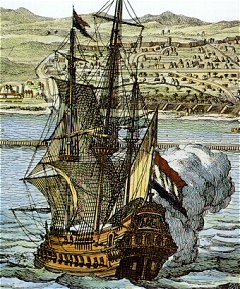 It
was actually political developments in Europe that led to Dutch
ambitions in the Malay archipelago. Portugal's days of glory and its
Age of Discovery were coming to an abrupt end. By the 1550s, the
economy was already in steep decline. Portugal's intolerant attitude
towards its conquered peoples and their neighbours meant that its
colonies were constantly in need of fresh supplies weapons, ships and
men - supplies the small country just did not have. Due to greed,
corruption, and mismanagement in its overseas possessions, even the
cost of administrating colonies and running trading posts abroad could
not be met. The Inquisition finally brought an end to the years of
exploration, expansion and exuberance. A crushing defeat at the hands
of
its Muslims foes, the Moors, in 1578 further weakened the Empire and
the
Portuguese finally suffered the humiliation of falling under Spanish
rule. It
was actually political developments in Europe that led to Dutch
ambitions in the Malay archipelago. Portugal's days of glory and its
Age of Discovery were coming to an abrupt end. By the 1550s, the
economy was already in steep decline. Portugal's intolerant attitude
towards its conquered peoples and their neighbours meant that its
colonies were constantly in need of fresh supplies weapons, ships and
men - supplies the small country just did not have. Due to greed,
corruption, and mismanagement in its overseas possessions, even the
cost of administrating colonies and running trading posts abroad could
not be met. The Inquisition finally brought an end to the years of
exploration, expansion and exuberance. A crushing defeat at the hands
of
its Muslims foes, the Moors, in 1578 further weakened the Empire and
the
Portuguese finally suffered the humiliation of falling under Spanish
rule.
At the same time, in 1581, the Protestant Dutch provinces were
in open rebellion against their Catholic masters in Spain and they
fought the Eighty Years War in their bid to establish Republic of the
United Netherlands (de Republiek der Verenigde Nederlanden).
Portugal itself became
dragged into Spain's many religious wars with the Protestant nations of
Europe.
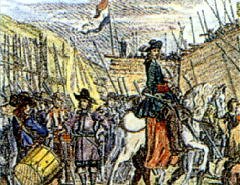 The
Dutch felt that the capture of Portuguese outposts and trade in
Asia would be an important second front that would lead towards the
eventual
defeat of the main enemy, Spain, and they established the Dutch East
India
Company (Verenigde Oost-Indische Compagnie, VOC), in 1602. Even
after
Portugal gained its independence from Spain in 1640, Dutch power and
influence
had already grown considerably in Southeast Asia, and the Portuguese
enclave
in the strategic Straits threatened Dutch naval supremacy. From the
view
point of trade,. the Dutch considered the conquest of Melaka essential
-
Dutch commercial policies were based on the principle of monopoly, and
the
existence of trade emporiums outside Dutch control worked against this
strategy.
The Dutch tried to establish one such monopoly on tin and early Dutch
efforts in the Malay Peninsula were concentrated on securing a firm
control of the tin trade on the west coast. The presence of the
Portuguese made this difficult. The logical solution to the problem was
the capture of the port, and this was achieved by the Dutch in 1641,
with the active help of the city's former rulers the Johor Sultanate. The
Dutch felt that the capture of Portuguese outposts and trade in
Asia would be an important second front that would lead towards the
eventual
defeat of the main enemy, Spain, and they established the Dutch East
India
Company (Verenigde Oost-Indische Compagnie, VOC), in 1602. Even
after
Portugal gained its independence from Spain in 1640, Dutch power and
influence
had already grown considerably in Southeast Asia, and the Portuguese
enclave
in the strategic Straits threatened Dutch naval supremacy. From the
view
point of trade,. the Dutch considered the conquest of Melaka essential
-
Dutch commercial policies were based on the principle of monopoly, and
the
existence of trade emporiums outside Dutch control worked against this
strategy.
The Dutch tried to establish one such monopoly on tin and early Dutch
efforts in the Malay Peninsula were concentrated on securing a firm
control of the tin trade on the west coast. The presence of the
Portuguese made this difficult. The logical solution to the problem was
the capture of the port, and this was achieved by the Dutch in 1641,
with the active help of the city's former rulers the Johor Sultanate.
The Dutch adopted their traditional policy of signing treaties
with the Malay tin-producing states, followed by the setting up of
fortified
trading posts or factories, as they were called. The treaties were
signed
in rapid sequence: Naning signed a treaty with the Dutch in 1641, Kedah
in 1642, Junk Ceylon in 1643 and Bangeri in 1645. But these treaties
brought
little benefit to the Dutch, for much of the tin trade was still in
non-Dutch
hands. The Dutch at times resorted to sterner measures - building
straegic
forts and imposing naval blockades - but the monopoly of the tin trade
proved
elusive.
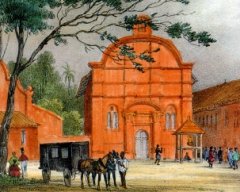 However,
Dutch relations with the Malay powers were more fortunate than
the Portuguese. Like the Portuguese, the Dutch had no enthusiasm for
territorial conquest in the Peninsula and only sought Melaka as a means
to control the Straits. But they did have much stronger naval power and
the Dutch were
far more successful in dominating the Straits than the Portuguese. In
their
attitude towards Melaka, the Portuguese and the Dutch differed
radically.
While the Portuguese tried to make Melaka the centre of their Southeast
Asian trade, the Dutch reduced Melaka to the position of just a western
outpost of their wider Indonesian empire and they redirected much of
the
trade towards Batavia. In the field of religion, the Portuguese were
zealous
in their hatred of Muslims and aggressively converted their subjects to
Catholicism.
The Dutch, on the other hand, were not interested in an aggressive
policy
of conversion, and generally did not interfere with local customs and
practices. However,
Dutch relations with the Malay powers were more fortunate than
the Portuguese. Like the Portuguese, the Dutch had no enthusiasm for
territorial conquest in the Peninsula and only sought Melaka as a means
to control the Straits. But they did have much stronger naval power and
the Dutch were
far more successful in dominating the Straits than the Portuguese. In
their
attitude towards Melaka, the Portuguese and the Dutch differed
radically.
While the Portuguese tried to make Melaka the centre of their Southeast
Asian trade, the Dutch reduced Melaka to the position of just a western
outpost of their wider Indonesian empire and they redirected much of
the
trade towards Batavia. In the field of religion, the Portuguese were
zealous
in their hatred of Muslims and aggressively converted their subjects to
Catholicism.
The Dutch, on the other hand, were not interested in an aggressive
policy
of conversion, and generally did not interfere with local customs and
practices.
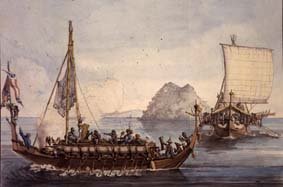 The
major Malay powers which had harassed the Portuguese in the
sixteenth century were also now on the decline. The Dutch were already
waging successful wars of conquest against the Javanese states in their
bid to secure the
island. The power of Acheh was already rapidly waning throughout the
region.
Johor entered into a ruinous war with the Sumatran state of Jambi in
1666
- a war which ended in the destruction of the Johore capital at Batu
Sawar
in 1673. Court intrigues, and disputes over succession to the throne
further
undermined the vitality of Johor. Later in the eighteenth century,
Johor
became an easy prey to Bugis infiltration. For the Dutch, the decline
of
these powers meant greater security for their own stations and naval
attacks
and blockades on Melaka no longer took place with the frequency,
intensity
and scale of the Portuguese era. Friction between the Dutch and the
Malay
States was quite common but it did not assume threatening proportions.
For
example, in 1651 the Dutch factory in Perak was destroyed by the
Malays,
and this was followed by a short period of hostilities, before a peace
treaty
was signed in 1655. The
major Malay powers which had harassed the Portuguese in the
sixteenth century were also now on the decline. The Dutch were already
waging successful wars of conquest against the Javanese states in their
bid to secure the
island. The power of Acheh was already rapidly waning throughout the
region.
Johor entered into a ruinous war with the Sumatran state of Jambi in
1666
- a war which ended in the destruction of the Johore capital at Batu
Sawar
in 1673. Court intrigues, and disputes over succession to the throne
further
undermined the vitality of Johor. Later in the eighteenth century,
Johor
became an easy prey to Bugis infiltration. For the Dutch, the decline
of
these powers meant greater security for their own stations and naval
attacks
and blockades on Melaka no longer took place with the frequency,
intensity
and scale of the Portuguese era. Friction between the Dutch and the
Malay
States was quite common but it did not assume threatening proportions.
For
example, in 1651 the Dutch factory in Perak was destroyed by the
Malays,
and this was followed by a short period of hostilities, before a peace
treaty
was signed in 1655.
 The
situation, however, was radically transformed in the eighteenth
century, largely because of the arrival of the Bugis. Originating from
Sulawesi,
the extension of Dutch power over their islands in the seventeenth
century
led to Bugis migration overseas, and they came to establish settlements
in various parts of the Malay Archipelago. In the Malay peninsula,
Bugis
settlements were concentrated on the west coast. By the beginning of
the
eighteenth century, the Bugis presence was strong enough to become a
major
influence in Malay politics. Within a few decades, Bugis power became
significant
in Selangor, Kedah, Perak and Johor - much to the detriment of the
Dutch
trade. In. 1756, the Dutch in Melaka made the first determined effort
to
stop the growth of Bugis expansion but the war brought no conclusive
result.
Bugis influence continued to be dominant, and Riau became their new
base,
not only for naval operations but also for trade, which successfully
encroached
on Dutch monopoly. The
situation, however, was radically transformed in the eighteenth
century, largely because of the arrival of the Bugis. Originating from
Sulawesi,
the extension of Dutch power over their islands in the seventeenth
century
led to Bugis migration overseas, and they came to establish settlements
in various parts of the Malay Archipelago. In the Malay peninsula,
Bugis
settlements were concentrated on the west coast. By the beginning of
the
eighteenth century, the Bugis presence was strong enough to become a
major
influence in Malay politics. Within a few decades, Bugis power became
significant
in Selangor, Kedah, Perak and Johor - much to the detriment of the
Dutch
trade. In. 1756, the Dutch in Melaka made the first determined effort
to
stop the growth of Bugis expansion but the war brought no conclusive
result.
Bugis influence continued to be dominant, and Riau became their new
base,
not only for naval operations but also for trade, which successfully
encroached
on Dutch monopoly.
 The
Dutch in Melaka were now being politically and commercially
isolated from the rest of the Malay Peninsula. The Dutch realised the
danger, and
in 1782 waged a full-scale war against the Bugis. The Bugis were
uprooted
from their entrenched positions and the fall of Riau in 1785 marked the
collapse of Bugis power in the peninsula. But events in Europe ensured
that Dutch
supremacy there was short-lived. With the outbreak of the Napoleonic
Wars
in Europe, Dutch possessions in Asia, including Melaka, passed into
British
hands. The foundation of Penang in 1786 and of Singapore in 1819,
strengthened
British influence in Malaya, and this influence was formally recognised
in
1824 with the signing of the Anglo-Dutch Treaty. By then, it was only
the
British who were left to wield colonial power in the peninsula. The
Dutch in Melaka were now being politically and commercially
isolated from the rest of the Malay Peninsula. The Dutch realised the
danger, and
in 1782 waged a full-scale war against the Bugis. The Bugis were
uprooted
from their entrenched positions and the fall of Riau in 1785 marked the
collapse of Bugis power in the peninsula. But events in Europe ensured
that Dutch
supremacy there was short-lived. With the outbreak of the Napoleonic
Wars
in Europe, Dutch possessions in Asia, including Melaka, passed into
British
hands. The foundation of Penang in 1786 and of Singapore in 1819,
strengthened
British influence in Malaya, and this influence was formally recognised
in
1824 with the signing of the Anglo-Dutch Treaty. By then, it was only
the
British who were left to wield colonial power in the peninsula.
|
The first multinational

The Dutch East India Company
"Help us, God!"

Melaka falls again
Warrior princes from Sulawesi

The Bugis
Dindings Fort

The fort at Pulau Pangkor
In the Hands of the Malays

G A Henty's tale of Malay pirates in the Dutch East Indies
Kuala Linggi Fort

Symbol of an
unlikely alliance
|

