|
|
An Authentic History of the Malay
Pirates
of the Indian Ocean
 With a Narrative of
the Expedition against the Inhabitants of Quallah Battoo,
commanded by Commodore Downes With a Narrative of
the Expedition against the Inhabitants of Quallah Battoo,
commanded by Commodore Downes
from
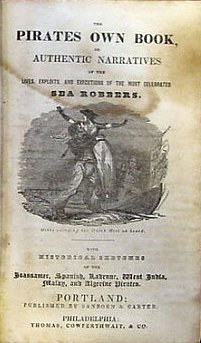
'The Pirates Own Book - Authentic Narratives of the Most Celebrated Sea
Robbers'
by Charles Ellms (originally published 1837)
A glance at the map of the East India Islands will convince us that
this
region of the globe must, from its natural configuration and locality;
be
peculiarly liable to become the seat of piracy. These islands form an
immense
cluster, lying as if it were in the high road which connects the
commercial
nations of Europe and Asia with each other, affording a hundred
fastnesses
from which to waylay the traveller. A large proportion of the
population
is at the same time confined to the coasts or the estuaries of rivers;
they
are fishermen and mariners; they are barbarous and poor, therefore
rapacious,
faithless and sanguinary. These are circumstances, it must be
confessed,
which militate strongly to beget a piratical character. It is not
surprising,
then, that the Malays should have been notorious for their depredations
from
our first acquaintance with them.
Among the tribes of the Indian Islands, the most noted for their
piracies
are, of course, the most idle, and the least industrious, and
particularly
such as are unaccustomed to follow agriculture or trade as regular
pursuits.
The agricultural tribes of Java, and many of Sumatra, never commit
piracy
at all; and the most civilized inhabitants of Celebes are very little
addicted
to this vice.
Among the most confirmed pirates are the true Malays, inhabiting the
small
islands about the eastern extremity of the straits of Malacca, and
those
lying between Sumatra and Borneo, down to Billitin and Cavimattir.
Still
more noted than these, are the inhabitants of certain islands situated
between
Borneo and the Phillipines, of whom the most desperate and enterprising
are
the Soolos and Illanoons, the former inhabiting a well known group of
islands
of the same name, and the latter being one of the most numerous nations
of
the great island of Magindando. The depredations of the proper Malays
extend
from Junkceylon to Java, through its whole coast, as far as Grip to
Papir
and Kritti, in Borneo and the western coast of Celebes. In another
direction
they infest the coasting trade of the Cochin Chinese and Siamese
nations
in the Gulf of Siam, finding sale for their booty, and shelter for
themselves
in the ports of Tringham, Calantan and Sahang. The most noted piratical
stations
of these people are the small islands about Lingin and Rhio,
particularly
Galang, Tamiang and Maphar. The chief of this last has seventy or
eighty
proas fit to undertake piratical expeditions.
The Soolo pirates chiefly confine their depredations to the Phillipine
Islands,
which they have continued to infest, with little interruption, for near
three
centuries, in open defiance of the Spanish authorities, and the
numerous
establishments maintained to check them. The piracies of the Illanoons,
on
the contrary, are widely extended, being carried on all the way from
their
native country to the Spice Islands, on one side, and to the Straits of
Malacca
on the other. In these last, indeed, they have formed, for the last few
years,
two permanent establishments; one of these situated on Sumatra, near
Indragiri,
is called Ritti, and the other a small island on the coast of Linga, is
named
Salangut. Besides those who are avowed pirates, it ought to be
particularly
noticed that a great number of the Malayan princes must be considered
as
accessories to their crimes, for they afford them protection,
contribute
to their outfit, and often share in their booty; so that a piratical
proa
is too commonly more welcome in their harbours than a fair trader.
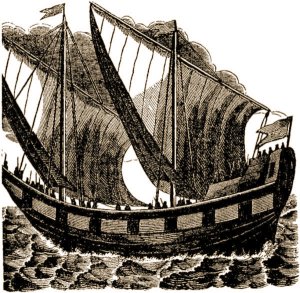
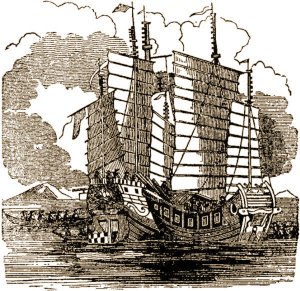
 The Malay piratical proas are from six to eight tons
burden, and run from
six to eight fathoms in length. They carry from one to two small guns,
with
commonly four swivels or rantakas to each side, and a crew of from
twenty
to thirty men. When they engage, they put up a strong bulwark of thick
plank;
the Illanoon proas are much larger and more formidable, and commonly
carry
from four to six guns, and a proportionable number of swivels, and have
not
unfrequently a double bulwark covered with buffalo hides; their crews
consist
of from forty to eighty men. Both, of course, are provided with spears,
krisses,
and as many fire arms as they can procure. Their modes of attack are
cautious
and cowardly, for plunder and not fame is their object. They lie
concealed
under the land, until they find a fit object and opportunity. The time
chosen
is when a vessel runs aground, or is becalmed, in the interval between
the
land and sea breezes. A vessel underway is seldom or never attacked.
Several
of the marauders attack together, and station themselves under the bows
and
quarters of a ship when she has no longer steerage way, and is
incapable
of pointing her guns. The action continues often for several hours,
doing
very little mischief; but when the crew are exhausted with the defence,
or
have expended their ammunition, the pirates take this opportunity of
boarding
in a mass. This may suggest the best means of defence. A ship, when
attacked
during a calm, ought, perhaps, rather to stand on the defensive, and
wait
if possible the setting in of the sea breeze, than attempt any active
operations,
which would only fatigue the crew, and disable them from making the
necessary
defence when boarding is attempted. Boarding netting, pikes and
pistols,
appear to afford effectual security; and, indeed, we conceive that a
vessel
thus defended by resolute crews of Europeans or Americans stand but
little
danger from any open attack of pirates whatsoever; for their guns are
so
ill served, that neither the hull or the rigging of a vessel can
receive
much damage from them, however much protracted the contest. The pirates
are
upon the whole extremely impartial in the selection of their prey,
making
little choice between natives and strangers, giving always, however, a
natural
preference to the most timid, and the most easily overcome. The Malay piratical proas are from six to eight tons
burden, and run from
six to eight fathoms in length. They carry from one to two small guns,
with
commonly four swivels or rantakas to each side, and a crew of from
twenty
to thirty men. When they engage, they put up a strong bulwark of thick
plank;
the Illanoon proas are much larger and more formidable, and commonly
carry
from four to six guns, and a proportionable number of swivels, and have
not
unfrequently a double bulwark covered with buffalo hides; their crews
consist
of from forty to eighty men. Both, of course, are provided with spears,
krisses,
and as many fire arms as they can procure. Their modes of attack are
cautious
and cowardly, for plunder and not fame is their object. They lie
concealed
under the land, until they find a fit object and opportunity. The time
chosen
is when a vessel runs aground, or is becalmed, in the interval between
the
land and sea breezes. A vessel underway is seldom or never attacked.
Several
of the marauders attack together, and station themselves under the bows
and
quarters of a ship when she has no longer steerage way, and is
incapable
of pointing her guns. The action continues often for several hours,
doing
very little mischief; but when the crew are exhausted with the defence,
or
have expended their ammunition, the pirates take this opportunity of
boarding
in a mass. This may suggest the best means of defence. A ship, when
attacked
during a calm, ought, perhaps, rather to stand on the defensive, and
wait
if possible the setting in of the sea breeze, than attempt any active
operations,
which would only fatigue the crew, and disable them from making the
necessary
defence when boarding is attempted. Boarding netting, pikes and
pistols,
appear to afford effectual security; and, indeed, we conceive that a
vessel
thus defended by resolute crews of Europeans or Americans stand but
little
danger from any open attack of pirates whatsoever; for their guns are
so
ill served, that neither the hull or the rigging of a vessel can
receive
much damage from them, however much protracted the contest. The pirates
are
upon the whole extremely impartial in the selection of their prey,
making
little choice between natives and strangers, giving always, however, a
natural
preference to the most timid, and the most easily overcome.
When an expedition is undertaken by the Malay pirates, they range
themselves
under the banner of some piratical chief noted for his courage and
conduct.
The native prince of the place where it is prepared, supplies the
adventurers
with arms, ammunition and opium, and claims as his share of the
plunder,
the female captives, the cannon, and one third of all the rest of the
booty.
In Nov. 1827, a principal chief of pirates, named Sindana, made a
descent
upon Mamoodgoo with forty-five proas, burnt three-fourths of the
campong,
driving the rajah with his family among the mountains. Some scores of
men
were killed, and 300 made prisoners, besides women and children to half
that
amount. In December following, when I was there, the people were slowly
returning
from the hills, but had not yet attempted to rebuild the campong, which
lay
in ashes. During my stay here (ten weeks) the place was visited by two
other
piratical chiefs, one of which was from Kylie, the other from Mandhaar
Point
under Bem Bowan, who appeared to have charge of the whole; between them
they
had 134 proas of all sizes.
Among the most desperate and successful pirates of the present day,
Raga
is most distinguished. He is dreaded by people of all denominations,
and
universally known as the "prince of pirates." For more than seventeen
years
this man has carried on a system of piracy to an extent never before
known;
his expeditions and enterprises would fill a large volume. They have
invariably
been marked with singular cunning and intelligence, barbarity, and
reckless
inattention to the shedding of human blood. He has emissaries every
where,
and has intelligence of the best description. It was about the year
1813
Raga commenced operations on a large scale. In that year he cut off
three
English vessels, killing the captains with his own hands. So extensive
were
his depredations about that time that a proclamation was issued from
Batavia,
declaring the east coast of Borneo to be under strict blockade. Two
British
sloops of war scoured the coast. One of which, the Elk, Capt. Reynolds,
was
attacked during the night by Raga's own proa, who unfortunately was not
on
board at the time. This proa which Raga personally commanded, and the
loss
of which he frequently laments, carried eight guns and was full of his
best
men.
A European vessel was faintly descried about three o'clock one foggy
morning;
the rain fell in torrents; the time and weather were favorable
circumstances
for a surprise, and the commander determined to distinguish himself in
the
absence of the Rajah Raga, gave directions to close, fire the guns and
board.
He was the more confident of success, as the European vessel was
observed
to keep away out of the proper course on approaching her. On getting
within
about an hundred fathoms of the Elk they fired their broadside, gave a
loud
shout, and with their long oars pulled towards their prey. The sound of
a
drum beating to quarters no sooner struck the ear of the astonished
Malays
than they endeavored to get away: it was too late; the ports were
opened,
and a broadside, accompanied with three British cheers, gave sure
indications
of their fate. The captain hailed the Elk, and would fain persuade him
it
was a mistake. It was indeed a mistake, and one not to be rectified by
the
Malayan explanation. The proa was sunk by repeated broadsides, and the
commanding
officer refused to pick up any of the people, who, with the exception
of
five were drowned; these, after floating four days on some spars, were
picked
up by a Pergottan proa, and told the story to Raga, who swore anew
destruction
to every European he should henceforth take. This desperado has for
upwards
of seventeen years been the terror of the Straits of Macassar, during
which
period he has committed the most extensive and dreadful excesses
sparing
no one. Few respectable families along the coast of Borneo and Celebes
but
have to complain of the loss of a proa, or of some number of their
race;
he is not more universally dreaded than detested; it is well known that
he
has cut off and murdered the crews of more than forty European vessels,
which
have either been wrecked on the coasts, or entrusted themselves in
native
ports. It is his boast that twenty of the commanders have fallen by his
hands.
The western coast of Celebes, for about 250 miles, is absolutely lined
with
proas belonging principally to three considerable rajahs, who act in
conjunction
with Raga and other pirates. Their proas may be seen in clusters of
from
50, 80, and 100 (at Sediano I counted 147 laying on the sand at high
water
mark in parallel rows,) and kept in a horizontal position by poles,
completely
ready for the sea. Immediately behind them are the campongs, in which
are
the crews; here likewise are kept the sails, gunpowder, &c.
necessary
for their equipment. On the very summits of the mountains, which in
many
parts rise abruptly from the sea, may be distinguished innumerable
huts;
here reside people who are constantly on the lookout. A vessel within
ten
miles of the shore will not probably perceive a single proa, yet in
less
than two hours, if the tide be high, she may be surrounded by some
hundreds.
Should the water be low they will push off during the night. Signals
are
made from mountain to mountain along the coast with the utmost
rapidity;
during the day time by flags attached to long bamboos; at night, by
fires.
Each chief sends forth his proas, the crews of which, in hazardous
cases,
are infuriated with opium, when they will most assuredly take the
vessel
if she be not better provided than most merchantmen.
 Mr. Dalton, who went to the Pergottan river in 1830 says,
"whilst I remained
here, there were 71 proas of considerable sizes, 39 of which were
professed
pirates. They were anchored off the point of a small promontory, on
which
the rajah has an establishment and bazaar. The largest of these proas
belonged
to Raga, who received by the fleet of proas, in which I came, his
regular
supplies of arms and ammunition from Singapore. Here nestle the
principal
pirates, and Raga holds his head quarters; his grand depot was a few
miles
farther up. Rajah Agi Bota himself generally resides some distance up a
small
river which runs eastward of the point; near his habitation stands the
principal
bazaar, which would be a great curiosity for an European to visit if he
could
only manage to return, which very few have. The Raga gave me a pressing
invitation
to spend a couple of days at his country house, but all the Bugis'
nacodahs
strongly dissuaded me from such an attempt. I soon discovered the cause
of
their apprehension; they were jealous of Agi Bota, well knowing he
would
plunder me, and considered every article taken by him was so much lost
to
the Sultan of Coti, who naturally would expect the people to reserve me
for
his own particular plucking. When the fact was known of an European
having
arrived in the Pergottan river, this amiable prince and friend of
Europeans,
impatient to seize his prey, came immediately to the point from his
country
house, and sending for the nacodah of the proa, ordered him to land me
and
all my goods instantly. An invitation now came for me to go on shore
and
amuse myself with shooting, and look at some rare birds of beautiful
plumage
which the rajah would give me if I would accept of them; but knowing
what
were his intentions, and being well aware that I should be supported by
all
the Bugis' proas from Coti, I feigned sickness, and requested that the
birds
might be sent on board. Upon this Agi Bota, who could no longer
restrain
himself, sent off two boats of armed men, who robbed me of many
articles,
and would certainly have forced me on shore, or murdered me in the proa
had
not a signal been made to the Bugis' nacodahs, who immediately came
with
their people, and with spears and krisses, drove the rajah's people
overboard.
The nacodahs, nine in number, now went on shore, when a scene of
contention
took place showing clearly the character of this chief. The Bugis from
Coti
explained, that with regard to me it was necessary to be particularly
circumspect,
as I was not only well known at Singapore, but the authorities in that
settlement
knew that I was on board the Sultan's proa, and they themselves were
responsible
for my safety. To this circumstance alone I owe my life on several
occasions,
as in the event of any thing happening to me, every nacodah was
apprehensive
of his proa being seized on his return to Singapore; I was therefore
more
peculiarly cared for by this class of men, and they are powerful. The
rajah
answered the nacodahs by saying, I might be disposed of as many others
had
been, and no further notice taken of the circumstance; he himself would
write
to Singapore that I had been taken by an alligator, or bitten by a
snake
whilst out shooting; and as for what property I might have in the proa
he
would divide it with the Sultan of Coti. The Bugis, however, refused to
listen
to any terms, knowing the Sultan of Coti would call him to an account
for
the property, and the authorities of Singapore for my life. Our proa,
with
others, therefore dropped about four miles down the river, where we
took
in fresh water. Here we remained six days, every argument being in vain
to
entice me on shore. At length the Bugis' nacodahs came to the
determination
to sail without passes, which brought the rajah to terms. The proas
returned
to the point, and I was given to understand I might go on shore in
safety.
I did so, and was introduced to the rajah whom I found under a shed,
with
about 150 of his people; they were busy gambling, and had the
appearance
of what they really are, a ferocious set of banditti. Agi Bota is a
good
looking man, about forty years of age, of no education whatever; he
divides
his time between gaming, opium and cockfighting; that is in the
interval
of his more serious and profitable employment, piracy and rapine. He
asked
me to produce what money I had about me; on seeing only ten rupees, he
remarked
that it was not worth while to win so small a sum, but that if I would
fight
cocks with him he would lend me as much money as I wanted, and added it
was
beneath his dignity to fight under fifty reals a battle. On my saying
it
was contrary to an Englishman's religion to bet wagers, he dismissed
me;
immediately after the two rajahs produced their cocks and commenced
fighting
for one rupee a side. I was now obliged to give the old Baudarre five
rupees
to take some care of me, as whilst walking about, the people not only
thrust
their hands into my pockets, but pulled the buttons from my clothes.
Whilst
sauntering behind the rajah's campong I caught sight of an European
woman,
who on perceiving herself observed, instantly ran into one of the
houses,
no doubt dreading the consequences of being recognized. There are now
in
the house of Agi Bota two European women; up the country there are
others,
besides several men. The Bugis, inimical to the rajah, made no secret
of
the fact; I had heard of it on board the proa, and some person in the
bazaar
confirmed the statement. On my arrival, strict orders had been given to
the
inhabitants to put all European articles out of sight. One of my
servants
going into the bazaar, brought me such accounts as induced me to visit
it.
In one house were the following articles: four Bibles, one in English,
one
in Dutch, and two in the Portuguese languages; many articles of wearing
apparel,
such as jackets and trowsers, with the buttons altered to suit the
natives;
pieces of shirts tagged to other parts of dress; several broken
instruments,
such as quadrants, spy glasses (two,) binnacles, with pieces of ship's
sails,
bolts and hoops; a considerable variety of gunner's and carpenter's
tools,
stores, &c. In another shop were two pelisses of faded lilac color;
these
were of modern cut and fashionably made. On enquiring how they became
possessed
of these articles, I was told they were some wrecks of European vessels
on
which no people were found, whilst others made no scruple of averring
that
they were formerly the property of people who had died in the country.
All
the goods in the bazaar belonged to the rajah, and were sold on his
account;
large quantities were said to be in his house up the river; but on all
hands
it was admitted Raga and his followers had by far the largest part of
what
was taken. A Mandoor, or head of one of the campongs, showed me some
women's
stockings, several of which were marked with the letters S.W.; also two
chemises,
one with the letters S.W.; two flannel petticoats, a miniature portrait
frame
(the picture was in the rajah's house,) with many articles of dress of
both
sexes. In consequence of the strict orders given on the subject I could
see
no more; indeed there were both difficulty and danger attending these
inquiries.
I particularly wanted to obtain the miniature picture, and offered the
Mandoor
fifty rupees if he could procure it; he laughed at me, and pointing
significantly
to his kris, drew one hand across my throat, and then across his own,
giving
me to understand such would be the result to us both on such an
application
to the rajah. It is the universal custom of the pirates, on this coast,
to
sell the people for slaves immediately on their arrival, the rajah
taking
for himself a few of the most useful, and receiving a percentage upon
the
purchase money of the remainder, with a moiety of the vessel and every
article
on board. European vessels are taken up the river, where they are
immediately
broken up. The situation of European prisoners is indeed dreadful in a
climate
like this, where even the labor of natives is intolerable; they are
compelled
to bear all the drudgery, and allowed a bare sufficiency of rice and
salt
to eat." Mr. Dalton, who went to the Pergottan river in 1830 says,
"whilst I remained
here, there were 71 proas of considerable sizes, 39 of which were
professed
pirates. They were anchored off the point of a small promontory, on
which
the rajah has an establishment and bazaar. The largest of these proas
belonged
to Raga, who received by the fleet of proas, in which I came, his
regular
supplies of arms and ammunition from Singapore. Here nestle the
principal
pirates, and Raga holds his head quarters; his grand depot was a few
miles
farther up. Rajah Agi Bota himself generally resides some distance up a
small
river which runs eastward of the point; near his habitation stands the
principal
bazaar, which would be a great curiosity for an European to visit if he
could
only manage to return, which very few have. The Raga gave me a pressing
invitation
to spend a couple of days at his country house, but all the Bugis'
nacodahs
strongly dissuaded me from such an attempt. I soon discovered the cause
of
their apprehension; they were jealous of Agi Bota, well knowing he
would
plunder me, and considered every article taken by him was so much lost
to
the Sultan of Coti, who naturally would expect the people to reserve me
for
his own particular plucking. When the fact was known of an European
having
arrived in the Pergottan river, this amiable prince and friend of
Europeans,
impatient to seize his prey, came immediately to the point from his
country
house, and sending for the nacodah of the proa, ordered him to land me
and
all my goods instantly. An invitation now came for me to go on shore
and
amuse myself with shooting, and look at some rare birds of beautiful
plumage
which the rajah would give me if I would accept of them; but knowing
what
were his intentions, and being well aware that I should be supported by
all
the Bugis' proas from Coti, I feigned sickness, and requested that the
birds
might be sent on board. Upon this Agi Bota, who could no longer
restrain
himself, sent off two boats of armed men, who robbed me of many
articles,
and would certainly have forced me on shore, or murdered me in the proa
had
not a signal been made to the Bugis' nacodahs, who immediately came
with
their people, and with spears and krisses, drove the rajah's people
overboard.
The nacodahs, nine in number, now went on shore, when a scene of
contention
took place showing clearly the character of this chief. The Bugis from
Coti
explained, that with regard to me it was necessary to be particularly
circumspect,
as I was not only well known at Singapore, but the authorities in that
settlement
knew that I was on board the Sultan's proa, and they themselves were
responsible
for my safety. To this circumstance alone I owe my life on several
occasions,
as in the event of any thing happening to me, every nacodah was
apprehensive
of his proa being seized on his return to Singapore; I was therefore
more
peculiarly cared for by this class of men, and they are powerful. The
rajah
answered the nacodahs by saying, I might be disposed of as many others
had
been, and no further notice taken of the circumstance; he himself would
write
to Singapore that I had been taken by an alligator, or bitten by a
snake
whilst out shooting; and as for what property I might have in the proa
he
would divide it with the Sultan of Coti. The Bugis, however, refused to
listen
to any terms, knowing the Sultan of Coti would call him to an account
for
the property, and the authorities of Singapore for my life. Our proa,
with
others, therefore dropped about four miles down the river, where we
took
in fresh water. Here we remained six days, every argument being in vain
to
entice me on shore. At length the Bugis' nacodahs came to the
determination
to sail without passes, which brought the rajah to terms. The proas
returned
to the point, and I was given to understand I might go on shore in
safety.
I did so, and was introduced to the rajah whom I found under a shed,
with
about 150 of his people; they were busy gambling, and had the
appearance
of what they really are, a ferocious set of banditti. Agi Bota is a
good
looking man, about forty years of age, of no education whatever; he
divides
his time between gaming, opium and cockfighting; that is in the
interval
of his more serious and profitable employment, piracy and rapine. He
asked
me to produce what money I had about me; on seeing only ten rupees, he
remarked
that it was not worth while to win so small a sum, but that if I would
fight
cocks with him he would lend me as much money as I wanted, and added it
was
beneath his dignity to fight under fifty reals a battle. On my saying
it
was contrary to an Englishman's religion to bet wagers, he dismissed
me;
immediately after the two rajahs produced their cocks and commenced
fighting
for one rupee a side. I was now obliged to give the old Baudarre five
rupees
to take some care of me, as whilst walking about, the people not only
thrust
their hands into my pockets, but pulled the buttons from my clothes.
Whilst
sauntering behind the rajah's campong I caught sight of an European
woman,
who on perceiving herself observed, instantly ran into one of the
houses,
no doubt dreading the consequences of being recognized. There are now
in
the house of Agi Bota two European women; up the country there are
others,
besides several men. The Bugis, inimical to the rajah, made no secret
of
the fact; I had heard of it on board the proa, and some person in the
bazaar
confirmed the statement. On my arrival, strict orders had been given to
the
inhabitants to put all European articles out of sight. One of my
servants
going into the bazaar, brought me such accounts as induced me to visit
it.
In one house were the following articles: four Bibles, one in English,
one
in Dutch, and two in the Portuguese languages; many articles of wearing
apparel,
such as jackets and trowsers, with the buttons altered to suit the
natives;
pieces of shirts tagged to other parts of dress; several broken
instruments,
such as quadrants, spy glasses (two,) binnacles, with pieces of ship's
sails,
bolts and hoops; a considerable variety of gunner's and carpenter's
tools,
stores, &c. In another shop were two pelisses of faded lilac color;
these
were of modern cut and fashionably made. On enquiring how they became
possessed
of these articles, I was told they were some wrecks of European vessels
on
which no people were found, whilst others made no scruple of averring
that
they were formerly the property of people who had died in the country.
All
the goods in the bazaar belonged to the rajah, and were sold on his
account;
large quantities were said to be in his house up the river; but on all
hands
it was admitted Raga and his followers had by far the largest part of
what
was taken. A Mandoor, or head of one of the campongs, showed me some
women's
stockings, several of which were marked with the letters S.W.; also two
chemises,
one with the letters S.W.; two flannel petticoats, a miniature portrait
frame
(the picture was in the rajah's house,) with many articles of dress of
both
sexes. In consequence of the strict orders given on the subject I could
see
no more; indeed there were both difficulty and danger attending these
inquiries.
I particularly wanted to obtain the miniature picture, and offered the
Mandoor
fifty rupees if he could procure it; he laughed at me, and pointing
significantly
to his kris, drew one hand across my throat, and then across his own,
giving
me to understand such would be the result to us both on such an
application
to the rajah. It is the universal custom of the pirates, on this coast,
to
sell the people for slaves immediately on their arrival, the rajah
taking
for himself a few of the most useful, and receiving a percentage upon
the
purchase money of the remainder, with a moiety of the vessel and every
article
on board. European vessels are taken up the river, where they are
immediately
broken up. The situation of European prisoners is indeed dreadful in a
climate
like this, where even the labor of natives is intolerable; they are
compelled
to bear all the drudgery, and allowed a bare sufficiency of rice and
salt
to eat."
 It is utterly impossible for Europeans who have seen these
pirates at such
places as Singapore and Batavia, to form any conception of their true
character.
There they are under immediate control, and every part of their
behaviour
is a tissue of falsehood and deception. They constantly carry about
with
them a smooth tongue, cringing demeanor, a complying disposition, which
always
asserts, and never contradicts; a countenance which appears to
anticipate
the very wish of the Europeans, and which so generally imposes upon his
understanding,
that he at once concludes them to be the best and gentlest of human
beings;
but let the European meet them in any of their own campongs, and a very
different
character they will appear. The character and treacherous proceeding
narrated
above, and the manner of cutting off vessels and butchering their
crews,
apply equally to all the pirates of the East India Islands, by which
many
hundred European and American vessels have been surprised and their
crews
butchered. It is utterly impossible for Europeans who have seen these
pirates at such
places as Singapore and Batavia, to form any conception of their true
character.
There they are under immediate control, and every part of their
behaviour
is a tissue of falsehood and deception. They constantly carry about
with
them a smooth tongue, cringing demeanor, a complying disposition, which
always
asserts, and never contradicts; a countenance which appears to
anticipate
the very wish of the Europeans, and which so generally imposes upon his
understanding,
that he at once concludes them to be the best and gentlest of human
beings;
but let the European meet them in any of their own campongs, and a very
different
character they will appear. The character and treacherous proceeding
narrated
above, and the manner of cutting off vessels and butchering their
crews,
apply equally to all the pirates of the East India Islands, by which
many
hundred European and American vessels have been surprised and their
crews
butchered.
On the 7th of February, 1831, the ship Friendship, Capt. Endicott, of
Salem
(Mass.,) was captured by the Malays while lying at Quallah Battoo, on
the
coast of Sumatra. In the forenoon of the fatal day, Capt. Endicott, Mr.
Barry,
second mate, and four of the crew, it seems went on shore as usual, for
the
purpose of weighing pepper, expecting to obtain that day two boat
loads,
which had been promised them by the Malays. After the first boat was
loaded,
they observed that she delayed some time in passing down the river, and
her
crew being composed of Malays, was supposed by the officers to be
stealing
pepper from her, and secreting it in the bushes. In consequence of this
conjecture,
two men were sent off to watch them, who on approaching the boat, saw
five
or six Malays leap from the jungle, and hurry on board of her. The
former,
however, supposed them to be the boat's crew, as they had seen an equal
number
quit her previous to their own approach. In this they were mistaken, as
will
subsequently appear. At this time a brig hove in sight, and was seen
standing
towards Soo Soo, another pepper port, distant about five miles. Capt.
Endicott,
on going to the beach to ascertain whether the brig had hoisted any
colors,
discovered that the boat with pepper had approached within a few yards
of
the Friendship, manned with an unusual number of natives.
It appears that when the pepper boats came alongside of the Friendship,
as
but few of the hands could work at a time, numbers of the Malays came
on
board, and on being questioned by Mr. Knight, the first officer, who
was
in the gangway, taking an account of the pepper, as to their business,
their
reply was, that they had come to see the vessel. Mr. Knight ordered
them
into their boat again, and some of them obeyed, but only to return
immediately
to assist in the work of death, which was now commenced by attacking
Mr.
Knight and the rest of the crew on board. The crew of the vessel being
so
scattered, it was impossible to concentrate their force so as to make a
successful
resistance. Some fell on the forecastle, one in the gangway, and Mr.
Knight
fell upon the quarter deck, severely wounded by a stab in the back
while
in the act of snatching from the bulwarks a boarding pike with which to
defend
himself.
The two men who were taking the pepper on a stage, having vainly
attempted
to get on board to the assistance of their comrades, were compelled to
leap
into the sea. One of them, Charles Converse, of Salem, being severely
wounded,
succeeded in swimming to the bobstays, to which he clung until taken on
board
by the natives, and from some cause he was not afterwards molested. His
companion,
John Davis, being unable to swim, drifted with the tide near the boat
tackle,
or davit falls, the blocks being overhauled down near the water; one of
these
he laid hold of, which the Malays perceiving, dropped their boat astern
and
despatched him! the cook sprang into a canoe along side, and in
attempting
to push off she was capsized; and being unable to swim, he got on the
bottom,
and paddled ashore with his hands, where he was made prisoner. Gregory,
an
Italian, sought shelter in the foretop-gallant cross-trees, where he
was
fired at several times by the Malays with the muskets of the
Friendship,
which were always kept loaded and ready for use while on the coast.
Three of the crew leaped into the sea, and swam to a point of land near
a
mile distant, to the northward of the town; and, unperceived by the
Malays
on shore, pursued their course to the northward towards Cape Felix,
intending
to go to the port of Annalaboo, about forty-five miles distant. Having
walked
all night, they found themselves, on the following morning, near the
promontory,
and still twenty-five miles distant from Annalaboo.
When Mr. Endicott, Mr. Barry, and the four seamen arrived at the beach,
they
saw the crew jumping into the sea; the truth now, with all its horrors,
flashed
upon his mind, that the vessel was attacked, and in an instant they
jumped
on board the boat and pushed off; at the same time a friendly rajah
named
Po Adam, sprang into the boat; he was the proprietor of a port and
considerable
property at a place called Pulo Kio, but three miles distant from the
mouth
of the river Quallah Battoo. More business had been done by the rajah
during
the eight years past than by any other on the pepper coast; he had
uniformly
professed himself friendly to the Americans, and he has generally
received
the character of their being honest. Speaking a little English as he
sprang
into the boat, he exclaimed, "Captain, you got trouble; Malay kill you,
he
kill Po Adam too!" Crowds of Malays assembled on both sides of the
river,
brandishing their weapons in a menacing manner, while a ferry boat,
manned
with eight or ten of the natives, armed with spears and krisses, pushed
off
to prevent the officers' regaining their ship. The latter exhibited no
fear,
and flourished the cutlass of Po Adam in a menacing manner from the
bows
of the boat; it so intimidated the Malays that they fled to the shore,
leaving
a free passage to the ship; but as they got near her they found that
the
Malays had got entire possession of her; some of them were promenading
the
deck, others were making signals of success to the people on shore,
while,
with the exception of one man aloft, not an individual of the crew
could
be seen. Three Malay boats, with about fifty men, now issued from the
river
in the direction of the ship, while the captain and his men, concluding
that
their only hope of recovering their vessel was to obtain assistance
from
some other ships, directed their course towards Muchie, where they knew
that
several American vessels were lying at anchor. Three American captains,
upon
hearing the misfortunes of their countrymen, weighed anchor immediately
for
Quallah Battoo, determined, if possible, to recover the ship. By four
o'clock
on the same day they gained an anchorage off that place; the Malays, in
the
meantime, had removed on shore every moveable article belonging to the
ship,
including specie, besides several cases of opium, amounting in all to
upwards
of thirty thousand dollars. This was done on the night of the 9th, and
on
the morning of the 10th, they contrived to heave in the chain cable,
and
get the anchor up to the bows; and the ship was drifting finely towards
the
beach, when the cable, not being stopped abaft the bitts, began
suddenly
to run out with great velocity; but a bight having by accident been
thrown
forward of the windlass, a riding turn was the consequence, and the
anchor,
in its descent, was suddenly checked about fifteen fathoms from the
hawse.
A squall soon after coming on, the vessel drifted obliquely towards the
shore,
and grounded upon a coral reef near half a mile to the southward of the
town.
The next day, having obtained a convenient anchorage, a message was
sent
by a friendly Malay who came on board at Soo Soo, demanding the
restoration
of the ship. The rajah replied that he would not give her up, but that
they
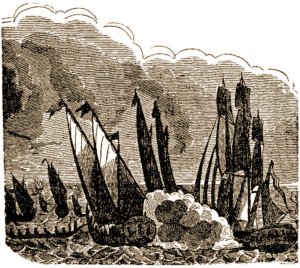
were welcome to take her if they could; a fire was now opened upon the
Friendship
by the vessels, her decks were crowded with Malays, who promptly
returned
the fire, as did also the forts on shore. This mode of warfare appeared
undecisive,
and it was determined to decide the contest by a close action. A number
of
boats being manned and armed with about thirty officers and men, a
movement
was made to carry the ship by boarding. The Malays did not wait the
approach
of this determined attack, but all deserted the vessel to her lawful
owners,
when she was taken possession of and warped out into deep water. The
appearance
of the ship, at the time she was boarded, beggars all description;
every
part of her bore ample testimony of the scene of violence and
destruction
with which she had been visited. The objects of the voyage were
abandoned,
and the Friendship returned to the United States. The public were
unanimous
in calling for a redress of the unparalleled outrage on the lives and
property
of citizens of the United States. The government immediately adopted
measures
to punish so outrageous an act of piracy by despatching the frigate
Potomac,
Commodore Downs, Commander. The Potomac sailed from New York the 24th
of
August, 1831, after touching at Rio Janeiro and the Cape of Good Hope.
She
anchored off Quallah Battoo in February 1832, disguised as a Danish
ship,
and came to in merchantman style, a few men being sent aloft, dressed
in
red and blue flannel shirts, and one sail being clewed up and furled at
a
time. A reconnoitering party were sent on shore disguised as pepper
dealers,
but they returned without being able to ascertain the situations of the
forts.
The ship now presented a busy scene; it was determined to commence an
attack
upon the town the next morning, and every necessary preparation was
accordingly
made, muskets were cleaned, cartridge-boxes buckled on, cutlasses
examined
and put in order, &c.
At twelve o'clock at night, all hands were called, those assigned to
take
part in the expedition were mustered, when Lieut. Shubrick, the
commander
of the detachment, gave them special orders; when they entered the
boats
and proceeded to the shore, where they effected a landing near the dawn
of
day, amid a heavy surf, about a mile and a half to the north of the
town,
undiscovered by the enemy, and without any serious accident having
befallen
them, though several of the party were thoroughly drenched by the
beating
of the surf, and some of their ammunition was injured.
 The troops then formed and took up their line of march
against the enemy,
over a beach of deep and heavy sand. They had not proceeded far before
they
were discovered by a native at a distance, who ran at full speed to
give
the alarm. A rapid march soon brought them up with the first fort, when
a
division of men, under the command of Lieut. Hoff, was detached from
the
main body, and ordered to surround it. The first fort was found
difficult
of access, in consequence of a deep hedge of thorn-bushes and brambles
with
which it was environed. The assault was commenced by the pioneers, with
their
crows and axes, breaking down the gates and forcing a passage. This was
attended
with some difficulty, and gave the enemy time for preparation. They
raised
their warwhoop, and resisted most manfully, fighting with spears,
sabres,
and muskets. They had also a few brass pieces in the fort, but they
managed
them with so little skill as to produce no effect, for the balls
uniformly
whizzed over the heads of our men. The resistance of the Malays was in
vain,
the fort was stormed, and soon carried; not, however, till almost every
individual
in it was slain. Po Mahomet, a chief of much distinction, and who was
one
of the principal persons concerned in the outrage on the Friendship was
here
slain; the mother of Chadoolah, another rajah, was also slain here;
another
woman fell at this port, but her rank was not ascertained; she fought
with
the spirit of a desperado. A seaman had just scaled one of the
ramparts,
when he was severely wounded by a blow received from a weapon in her
hands,
but her life paid the forfeit of her daring, for she was immediately
transfixed
by a bayonet in the hands of the person whom she had so severely
injured.
His head was wounded by a javelin, his thumb nearly cut off by a sabre,
and
a ball was shot through his hat. The troops then formed and took up their line of march
against the enemy,
over a beach of deep and heavy sand. They had not proceeded far before
they
were discovered by a native at a distance, who ran at full speed to
give
the alarm. A rapid march soon brought them up with the first fort, when
a
division of men, under the command of Lieut. Hoff, was detached from
the
main body, and ordered to surround it. The first fort was found
difficult
of access, in consequence of a deep hedge of thorn-bushes and brambles
with
which it was environed. The assault was commenced by the pioneers, with
their
crows and axes, breaking down the gates and forcing a passage. This was
attended
with some difficulty, and gave the enemy time for preparation. They
raised
their warwhoop, and resisted most manfully, fighting with spears,
sabres,
and muskets. They had also a few brass pieces in the fort, but they
managed
them with so little skill as to produce no effect, for the balls
uniformly
whizzed over the heads of our men. The resistance of the Malays was in
vain,
the fort was stormed, and soon carried; not, however, till almost every
individual
in it was slain. Po Mahomet, a chief of much distinction, and who was
one
of the principal persons concerned in the outrage on the Friendship was
here
slain; the mother of Chadoolah, another rajah, was also slain here;
another
woman fell at this port, but her rank was not ascertained; she fought
with
the spirit of a desperado. A seaman had just scaled one of the
ramparts,
when he was severely wounded by a blow received from a weapon in her
hands,
but her life paid the forfeit of her daring, for she was immediately
transfixed
by a bayonet in the hands of the person whom she had so severely
injured.
His head was wounded by a javelin, his thumb nearly cut off by a sabre,
and
a ball was shot through his hat.
Lieutenants Edson and Ferret proceeded to the rear of the town, and
made
a bold attack upon that fort, which, after a spirited resistance on the
part
of the Malays, surrendered. Both officers and marines here narrowly
escaped
with their lives. One of the natives in the fort had trained his piece
in
such a manner as to rake their whole body, when he was shot down by a
marine
while in the very act of applying a match to it. The cannon was
afterwards
found to have been filled with bullets. This fort, like the former, was
environed
with thick jungle, and great difficulty had been experienced in
entering
it. The engagement had now become general, and the alarm universal.
Men,
women and children were seen flying in every direction, carrying the
few
articles they were able to seize in the moments of peril, and some of
the
men were cut down in the flight. Several of the enemy's proas, filled
with
people, were severely raked by a brisk fire from the six pounder, as
they
were sailing up the river to the south of the town, and numbers of the
natives
were killed. The third and most formidable fort was now attacked, and
it
proved the most formidable, and the co-operation of the several
divisions
was required for its reduction; but so spirited was the fire poured
into
it that it was soon obliged to yield, and the next moment the American
colors
were seen triumphantly waving over its battlements. The greater part of
the
town was reduced to ashes. The bazaar, the principal place of
merchandize,
and most of the private dwellings were consumed by fire. The triumph
had
now been completed over the Malays; ample satisfaction had been taken
for
their outrages committed upon our own countrymen, and the bugle sounded
the
return of the ship's forces; and the embarkation was soon after
effected.
The action had continued about two hours and a half, and was gallantly
sustained
both by officers and men, from its commencement to its close. The loss
on
the part of the Malays was near a hundred killed, while of the
Americans
only two lost their lives. Among the spoils were a Chinese gong, a
Koran,
taken at Mahomet's fort, and several pieces of rich gold cloth. Many of
the
men came off richly laden with spoils which they had taken from the
enemy,
such as rajah's scarfs, gold and silver chunam boxes, chains, ear rings
and
finger rings, anklets and bracelets, and a variety of shawls, krisses
richly
hilted and with gold scabbards, and a variety of other ornaments. Money
to
a considerable amount was brought off. That nothing should be left
undone
to have an indelible impression on the minds of these people, of the
power
of the United States to inflict punishment for aggressions committed on
her
commerce, in seas however distant, the ship was got underway the
following
morning, and brought to, with a spring on her cable, within less than a
mile
of the shore, when the larboard side was brought to bear nearly upon
the
site of the town. The object of the Commodore, in this movement, was
not
to open an indiscriminate or destructive fire upon the town and
inhabitants
of Quallah Battoo, but to show them the irresistible power of
thirty-two
pound shot, and to reduce the fort of Tuca de Lama, which could not be
reached
on account of the jungle and stream of water, on the morning before,
and
from which a fire had been opened and continued during the embarkation
of
the troops on their return to the ship. The fort was very soon
deserted,
while the shot was cutting it to pieces, and tearing up whole
cocoa-trees
by the roots. In the afternoon a boat came off from the shore, bearing
a
flag of truce to the Commodore, beseeching him, in all the practised
forms
of submission of the east, that he would grant them peace, and cease to
fire
his big guns. Hostilities now ceased, and the Commodore informed them
that
the objects of his government in sending him to their shores had now
been
consummated in the punishment of the guilty, who had committed their
piracies
on the Friendship. Thus ended the intercourse with Quallah Battoo. The
Potomac
proceeded from this place to China, and from thence to the Pacific
Ocean;
after looking to the interests of the American commerce in those parts
she
arrived at Boston in 1834, after a three years' absence.
Write to the Webmaster: sabrizain@malaya.org.uk
The
Sejarah Melayu
website is
maintained solely by myself and does not receive any funding
support from any governmental, academic, corporate or other
organizations. If you have found the Sejarah Melayu website useful, any
financial contribution you can make, no matter how small, will be
deeply appreciated and assist greatly in the continued maintenance of
this site.
|
|

